Legends of the 20th Century Highways
Automobile journeys of the 20th century are stories of people who stepped beyond the ordinary and set out for places no one had driven to before them. Routes that once seemed reckless became legends, and the travelers themselves became icons of their era.
The history of road travel begins with the dream of crossing continents, conquering deserts, and covering thousands of miles. These individuals did not know every obstacle in advance, yet they kept moving forward, guided by curiosity and courage. Their examples continue to inspire today.
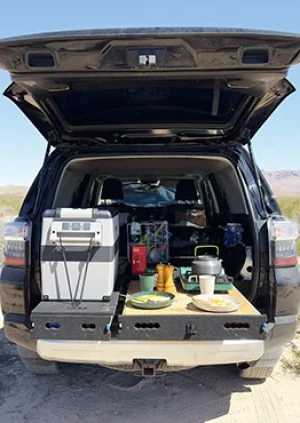
Many people now draw inspiration from these routes, choosing a dependable vehicle for long distances, such as the Toyota 4Runner, to experience the spirit of the road with comfort and confidence.
Pioneers of the Open Road
At the beginning of the 20th century, when automobiles were still rare, a few enthusiasts were already dreaming of long journeys.
One of the first was Horatio Nelson Jackson. In 1903, he completed what was an extraordinary journey for his time from the West Coast of the United States to New York. Imagine dirt roads, swamps, sudden weather changes, and constant breakdowns. No one had ever completed such a route by car. Jackson finished it in 63 days, relying on resourcefulness, intuition, and remarkable endurance. His trip became the first officially documented transcontinental automobile journey in history.
A few years later, the world reconsidered who could be an automobile driver. Alice Huyler Ramsey became the first woman to drive from New York to San Francisco in 1909. Covering approximately 3,800 miles in 59 days was regarded as a true achievement at the time.
Another notable group, The Vagabonds, included Thomas Edison, Henry Ford, John Burroughs, and Harvey Firestone. Their joint summer trips through rural America became a social phenomenon. The friends tested automobiles in real conditions, exchanged ideas, and encouraged society to rethink travel and personal freedom.
Routes That Shaped the World
As individual journeys became more common, the global community began organizing true challenges. In 1907, the legendary Beijing to Paris race took place. Fourteen teams set out from Beijing with the intention of finishing in France. The winner was the Italian aristocrat Prince Scipione Borghese in his Itala automobile. The race demonstrated that a car could cover thousands of miles in conditions that had recently seemed impossible.
Africa also became the setting for historic journeys. In 1924, Stella Court Treatt set out from Cape Town to Cairo. The route, which even geographic expeditions had hesitated to attempt before her, lasted nearly two years. Stella completed it with minimal maps and absolute confidence in her purpose. The journey concluded in 1926, leaving accounts that inspired generations.
Another legend was Aloha Wanderwell. From a young age, this American traveler decided to drive around the world. Between 1922 and 1927, her route passed through dozens of countries, covering hundreds of thousands of miles. She not only saw the world, but documented it through photographs, notes, and stories, preserving the spirit of road travel for future generations.
The Significance of These Routes for Society
Automobile travel reflected the spirit of the era and society’s evolving expectations. People realized that even the most remote corners of the world could be seen firsthand, if they were willing to take the wheel.
Many pioneers returned with images of other cultures, along with stories about people and customs that seemed remarkable. Their accounts were published in newspapers and books, inspiring artists, writers, and future engineers.
These journeys became part of the cultural heritage of the automotive world. Even decades later, their stories live on in every new mile traveled by modern road explorers.
From Legends of the Past to the Road Today
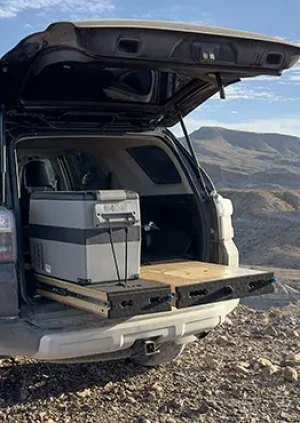
Modern road travel is no longer tied to the same risks faced by early pioneers. Roads have become safer, maps more accurate, and vehicles more reliable. Today’s travelers choose cars and equipment that make long distances comfortable and secure. For example, a 4Runner sleeping platform is an ideal solution for those who enjoy stopping wherever they wish, feeling connected to the legendary routes of the past.
Many who set out for extended trips know that cooking outdoors can be part of the experience. That is why a pull out kitchen has become an essential element of modern vehicle-based travel.
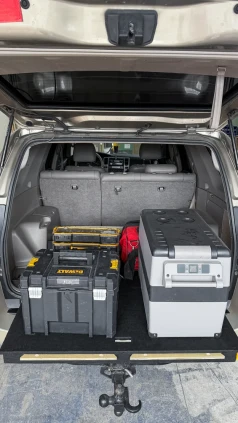
And, of course, those who value order in their vehicle often choose models with thoughtfully designed storage systems, such as 4Runner storage solutions.
Every mile is an opportunity to feel the spirit of the great pioneers and leave your own mark on the history of the road.